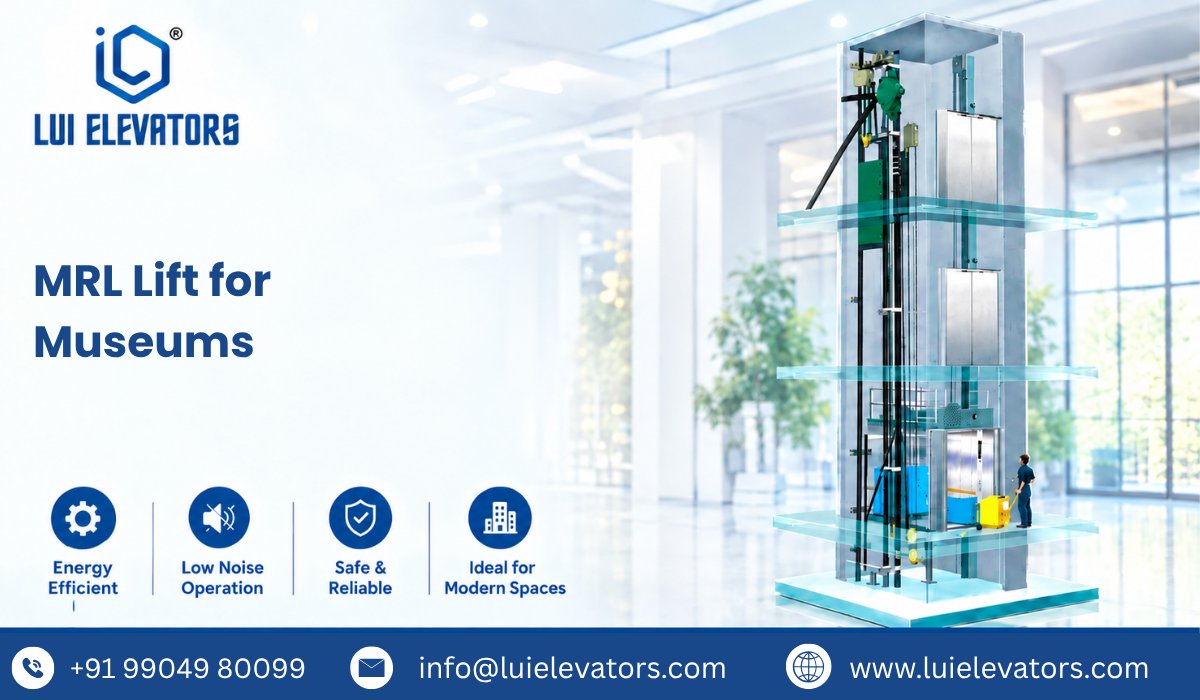
Museums are more than buildings—they are carefully designed spaces where visitors come to experience history, art, culture, and knowledge. Every part of a museum, including vertical transportation, should support that experience. A modern MRL Lift for Museums can provide smooth, quiet, safe, and space-efficient movement between galleries, exhibition floors, offices, and visitor facilities.
MRL stands for Machine Room-Less. The compact traction machinery is integrated into the hoistway, eliminating the requirement for a conventional separate machine room. This makes MRL technology especially attractive for museums where architectural appearance, available space, energy efficiency, and visitor comfort are important considerations.
Lui Elevators manufactures MRL elevator solutions designed around project requirements, with emphasis on safety, ride comfort, modern technology, and reliable performance.
Museums often have unique architectural layouts, limited construction space, heritage structures, and high visitor movement during exhibitions. A machine-room-less elevator can help address several of these requirements.
Because the traction equipment is positioned within the hoistway rather than a conventional machine room, the building can make better use of available space. This can also provide greater flexibility when planning rooftops and upper floors.
For museums, quiet operation is another important consideration. Excessive mechanical noise can disturb visitors, especially inside galleries, art exhibition areas, and educational spaces. Gearless traction technology is designed to provide smooth and low-noise operation.
A well-designed museum elevator should combine functionality with an appearance that complements the building. Important features can include:
Lui Elevators' MRL systems use microprocessor-based control and VVVF drive technology, with features intended to support precise levelling, comfortable rides, and reliable operation.
A museum elevator may serve families, senior citizens, school groups, tourists, staff, and people with mobility requirements throughout the day. Therefore, ride quality and accessibility should be considered alongside capacity.
A Top MRL Lift for Museums should provide controlled starts and stops, dependable door operation, and accurate floor positioning. These features reduce unnecessary movement and make the journey more comfortable for passengers.
Cabin design also matters. Museums often invest heavily in architecture and interiors, so elevator cabins should complement rather than distract from the overall environment. Stainless steel finishes, attractive panels, suitable lighting, handrails, mirrors, and customized interiors can be considered according to the project.
For a public building such as a museum, elevator quality is not simply about appearance. Components, engineering, installation, testing, maintenance, and statutory compliance all contribute to long-term performance.
Lui Elevators states that its MRL elevators are developed with quality and safety as core priorities and designed according to applicable standards and project requirements. Final compliance should always be confirmed based on the applicable Indian regulations, approved design, installation, testing, and local authority requirements.
Regular preventive maintenance is equally important. Museum operators should work with an experienced service provider to inspect safety components, doors, traction systems, controls, and other critical equipment at appropriate intervals.
Selecting the Best MRL Lift for Museums does not mean choosing a standard model based only on price. The right elevator depends on several factors:
A professional elevator manufacturer can assess these factors before recommending a suitable configuration. This project-specific approach helps prevent costly changes during installation.
For museums and cultural institutions in Gujarat, an MRL Lift for Museums in Ahmedabad can be an efficient solution where space utilization and modern building design are important. Ahmedabad's growing commercial and institutional infrastructure has increased the need for dependable vertical transportation solutions.
Lui Elevators is based in Ahmedabad and supplies elevator solutions for projects in different parts of India. Its MRL offering is positioned for applications where space efficiency, energy-conscious operation, ride comfort, and contemporary design are required.
A MRL Lift for Museums in India can also be considered for museums, galleries, heritage centres, science centres, cultural institutions, and educational facilities across major cities.
Museum elevator requirements can be explored in cities such as:
Selecting an experienced MRL Lift Manufacturer for Museums can make the entire project easier—from initial site assessment and design to manufacturing, installation, commissioning, and after-sales support.
Lui Elevators offers MRL, traction, passenger, hospital, goods, and other elevator solutions and provides installation and maintenance support according to project requirements.
The company also emphasizes customized elevator designs, quality components, and technology suited to modern vertical transportation requirements.
When selecting an MRL Lift Supplier for Museums, evaluate more than the product brochure. Ask about:
A supplier with comprehensive technical and service support can provide greater confidence over the elevator's operating life.
The MRL Lift Price for Museums varies according to capacity, number of floors, travel height, speed, cabin dimensions, door type, finishes, controls, safety features, installation requirements, and site conditions.
Instead of selecting the lowest quotation, museum owners should compare specifications, quality, warranty, service support, and lifecycle value. A properly engineered elevator can deliver better long-term value than a system selected solely on initial purchase cost.
Yes. MRL elevators can be suitable for museums where space optimization, smooth operation, modern design, and dependable visitor transportation are required. Final suitability depends on the building and project specifications.
Generally, no. The traction machinery is integrated into the hoistway, removing the need for a conventional separate machine room.
Yes. Cabin finishes, lighting, panels, doors, and other design elements can be selected according to the architectural concept and technical requirements.
Start by sharing your building drawings, number of floors, shaft dimensions, expected capacity, and preferred cabin design with the manufacturer. The elevator team can then recommend an appropriate configuration and quotation.
If you are planning a new museum, renovating an existing cultural facility, or upgrading vertical transportation, choosing the right elevator partner is essential. Lui Elevators combines MRL technology, engineering expertise, customization, installation, and maintenance support to develop solutions according to project requirements.
Contact Lui Elevators today for a project-specific consultation, technical guidance, and quotation for your museum elevator requirement. Discuss your building requirements with the team and discover a safe, comfortable, space-efficient vertical mobility solution for your visitors and staff.

+91 63570 09292
info@luielevators.com
D-16,20,21 Swarnim Industrial Park, Phase-2, Bakrol - Bujrang, Ahmedabad-382430